
A Few Quiet Days in a Schist Village
From Cabeça to Gondramaz, and the subtle rhythm of stone

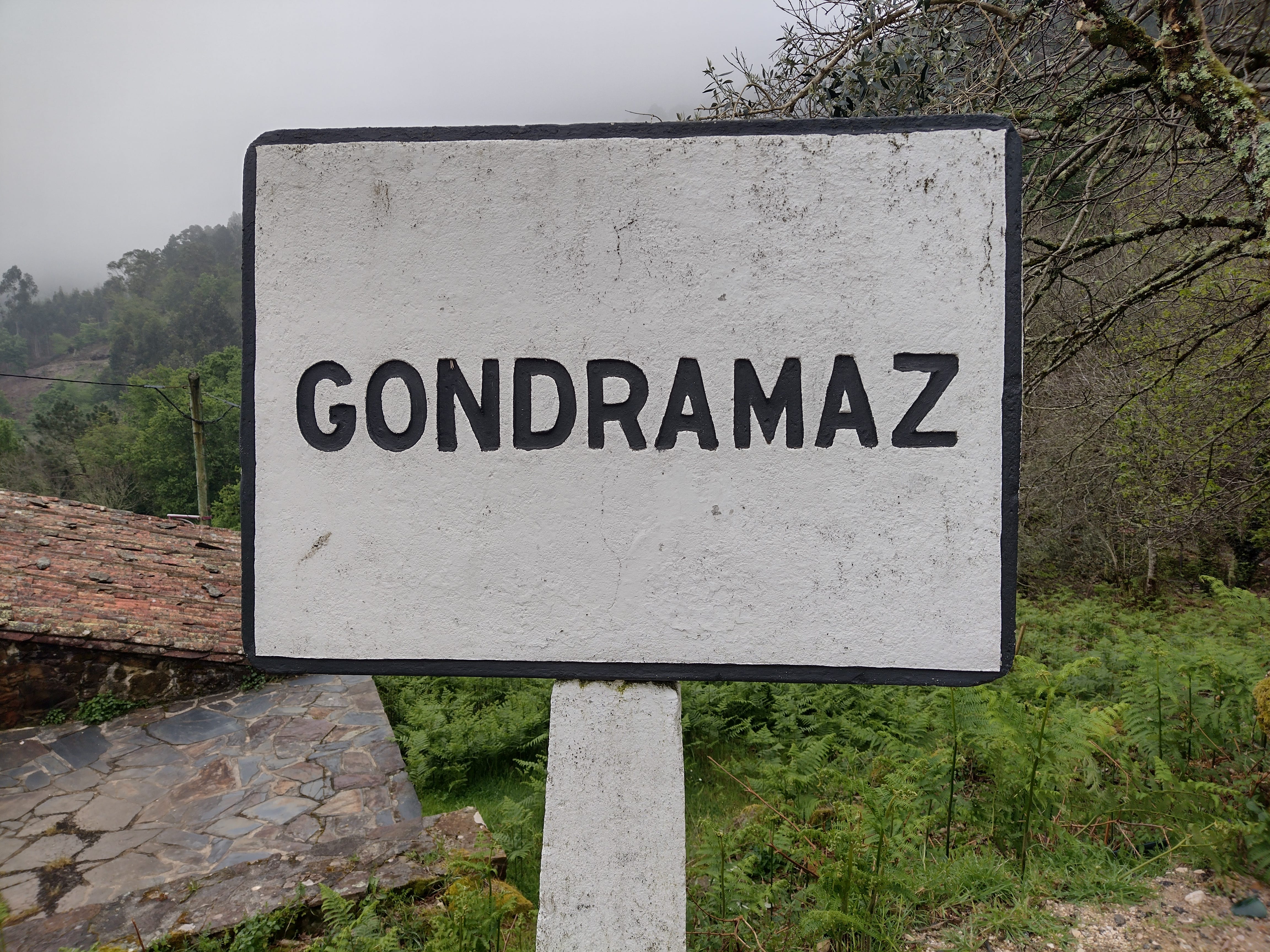
There are places in Portugal that don’t immediately explain themselves. They ask you to slow down first.
Gondramaz, one of Portugal’s Schist Villages, is one of those places. And to understand it, it helps to begin with the stone.
What Is a Schist Village?
Across central Portugal lies a network of small mountain communities known as the Aldeias do Xisto (Schist Villages). This collection of 27 villages, many with origins stretching back centuries, was built using locally sourced schist, a dark, layered metamorphic stone that gives these places their distinctive character.
Often mistaken for shale, schist is stronger and more durable, forming the stacked stone homes, slate-toned rooftops, and narrow pathways that define these villages.
For generations, they were agricultural communities: remote, self-sufficient, and closely tied to the land. Over time, many were abandoned as people left for Portugal’s cities in search of work and opportunity.
During the past two decades, many have been carefully restored not as replicas of the past, but as living villages that are now part of a growing movement toward slower, more intentional travel.


This post is a bit longer than what fits comfortably in email. If it’s cut off, you can continue reading here.
Where It Began for Us: Cabeça
Our first experience with a Schist village came a few years ago in Cabeça.
That visit stayed with us.
There was something about the stillness, the texture of the stone, and the way the village seemed to exist slightly outside the pace of modern life. At the time, Paul and I left with a simple thought:
What would it be like to actually stay a few days in one of these villages?
That question lingered.
Choosing Gondramaz
When we began looking more seriously, we realized quickly that not all Schist villages would be the right fit for us.
Some are steep. Some require long walks just to enter. Others feel more remote or physically demanding than we wanted.
Gondramaz stood out:
Compact and manageable
Accessible without overly difficult navigation
Walkable, without extreme elevation changes
Connected to walking and biking trails throughout the region
It felt like the right balance.
Reaching the village is part of the experience. The road winds steadily into the mountains, narrow in places, and best approached with patience, but it’s also what begins to separate you from the pace of everyday life.
Staying Within the Village: Mountain Whisper
We chose to stay in one of the restored homes through Mountain Whisper, which has carefully brought several village houses back into use as guest accommodations.
Rather than building something new, the approach here is to work within what already exists, allowing visitors to experience the village from the inside, not just as observers.
Our stay there became a meaningful part of the experience and one that deserves its own story, which I will share separately in a future article. In the meantime, you can read my review on TripAdvisor here.


Life in Gondramaz
There is very little here in the traditional sense of tourism. No shops. No galleries. Only a small chapel, a public fountain, and the quiet rhythm of daily life.
The fountain sits along the main street, near the chapel, a simple stone structure fed by water from the surrounding mountains.


One afternoon, we met a resident (there are only 10 full-time residents) filling a container at the fountain. Between English and Portuguese, Paul asked her if the water was good. She smiled and said yes.
So, we tried it.
The water was cool and clear, with a slight minerality present, but not overpowering. Paul paused after his first sip and said it might be the best water he had ever tasted.
Moments like that seem small at the time, but they stay with you.
Like many small villages, Gondramaz has its own rhythm including a few dogs that roam freely through the streets, day and night. They appeared well cared for and entirely at ease in their surroundings, part of the everyday life of the village.
It’s a detail that may feel entirely natural to some, and worth noting for others.
On our first night, Paul and I stepped outside. There was silence. The kind that makes you suddenly aware of how much sound usually surrounds you. Not empty. Just still.
Above us, the sky opened wide. Without light pollution, the stars felt closer, brighter, almost layered across the darkness.


Inside, we lit the fireplace, settled onto the sofa, and let the evening unfold, slowly finishing the last of a bottle of wine while soft jazz played in the background.
Time, in those moments, felt unstructured.
Another evening, the mountains shifted again. Clouds rolled into the Lousã Valley, gathering quietly at first. Then the sky broke open with thunder echoing across the hills, lightning illuminating the landscape in brief, brilliant flashes.
It was dramatic, but not unsettling. Just another expression of the place.
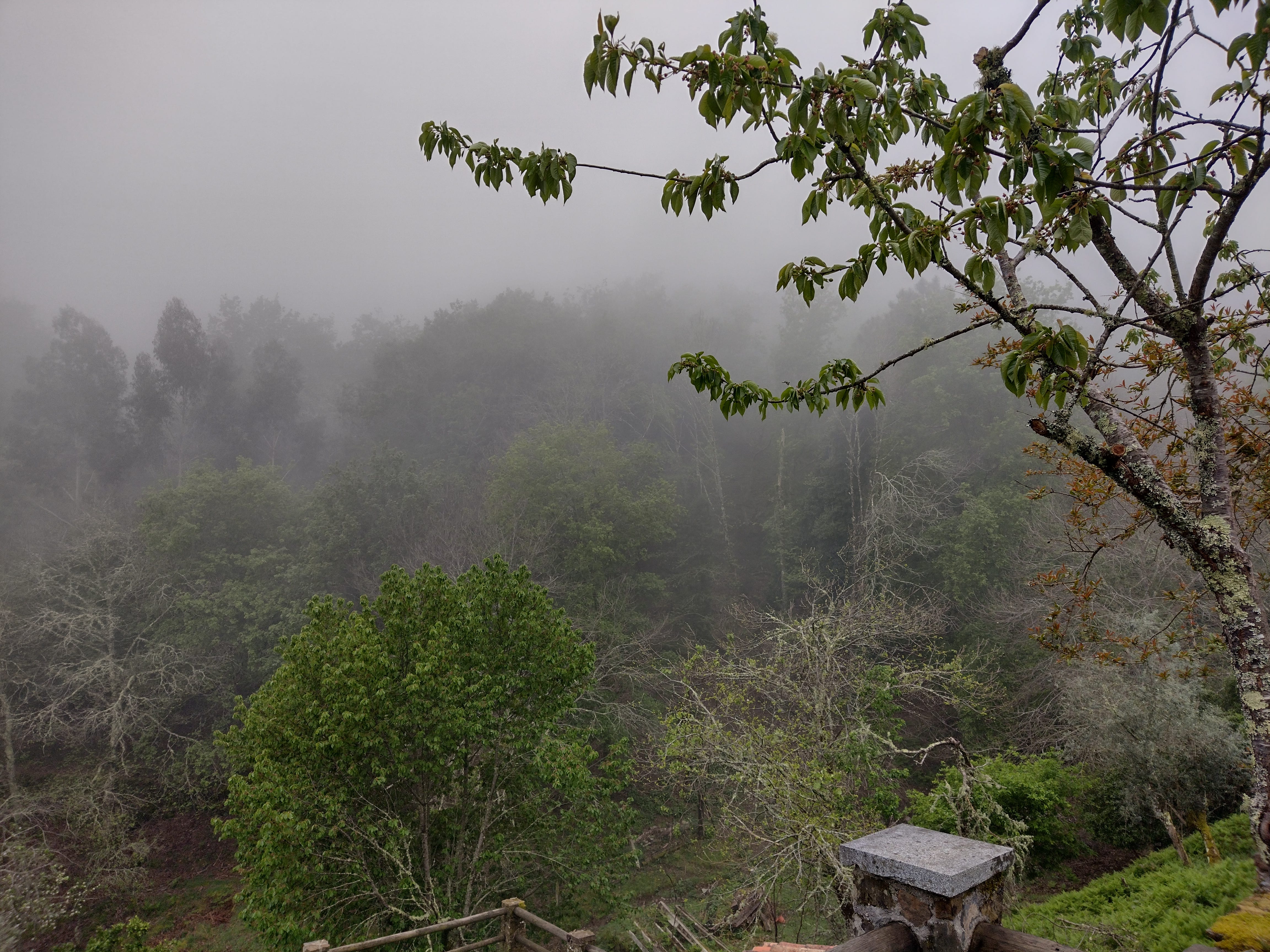
During the day, we wandered the narrow stone paths that wind through the village.
There is a particular feeling that comes from walking there. The walls are not just built, they are marked. Sculptures, carvings, and small etched details appear unexpectedly, reminders of the artisans who once lived and worked here.
At times, I found myself reaching out to touch the stone as we passed, feeling its texture, its unevenness, its weight.
It’s easy to think of places like this in terms of restoration. But Gondramaz feels less like something recreated and more like something carried forward.


Exploring Beyond the Village
We used Gondramaz as a base to explore nearby villages, including Cerdeira.
The drives are beautiful but narrow, winding, and best approached with care.
We had planned to visit Talasnal as well, but weather shifted our plans, something that feels entirely appropriate in a place like this.
Gondramaz at a Glance:
Region: Serra da Lousã, Central Portugal
Type: Schist Village (Aldeias do Xisto network)
Vibe: Quiet, reflective, nature-focused
Best For: Slow travel, hiking, photography, disconnecting
Distance: ~45 minutes from Coimbra
If You Visit:
Plan to arrive before dark.
Expect winding mountain roads.
Allow time to walk into and around the village.
Bring what you need. There are no shops.
There is just one restaurant in the village only open occasionally on weekends serving traditional regional dishes such as goat.
Be prepared for a slower pace.
Wildfire Awareness: This region of Central Portugal can experience wildfires during the warmer months. Before traveling, especially in summer, check current conditions and road access on Fogos.pt.
Gondramaz is not about activity or spectacle. It is about stepping into a place that has endured through time, through abandonment, and now through careful restoration and allowing yourself to move at its pace.
It’s in the quiet of the night sky, the warmth of a fire, the taste of water drawn from the mountain, and the feeling of stone beneath your hand.
And if you’ve ever wondered what it might feel like to live, even briefly, inside that rhythm…
This is one way to find out.
Thanks for being on this Journey with me.
Thank you for reading Our Portugal Journey. This publication is free and open to everyone, and it exists thanks to the support of readers like you.
If this work resonates with you, you’re warmly invited to subscribe - or, if you’d like, to support it as a paid subscriber and help keep it independent.
You can also buy me a coffee (or a glass of wine) anytime right here.
However you choose to support this work, I’m truly grateful you’re here.
Until next time…
Obrigada!
Carol.
This is a dream of mine though I'm not sure how possible it is with a family of five. Thank you for sharing your experience.
Wow, so unique and spectacular!! As always, Paul's photos are awesome and definitely enhance the narrative.