
Castles in the Sand
The Wider Quiet

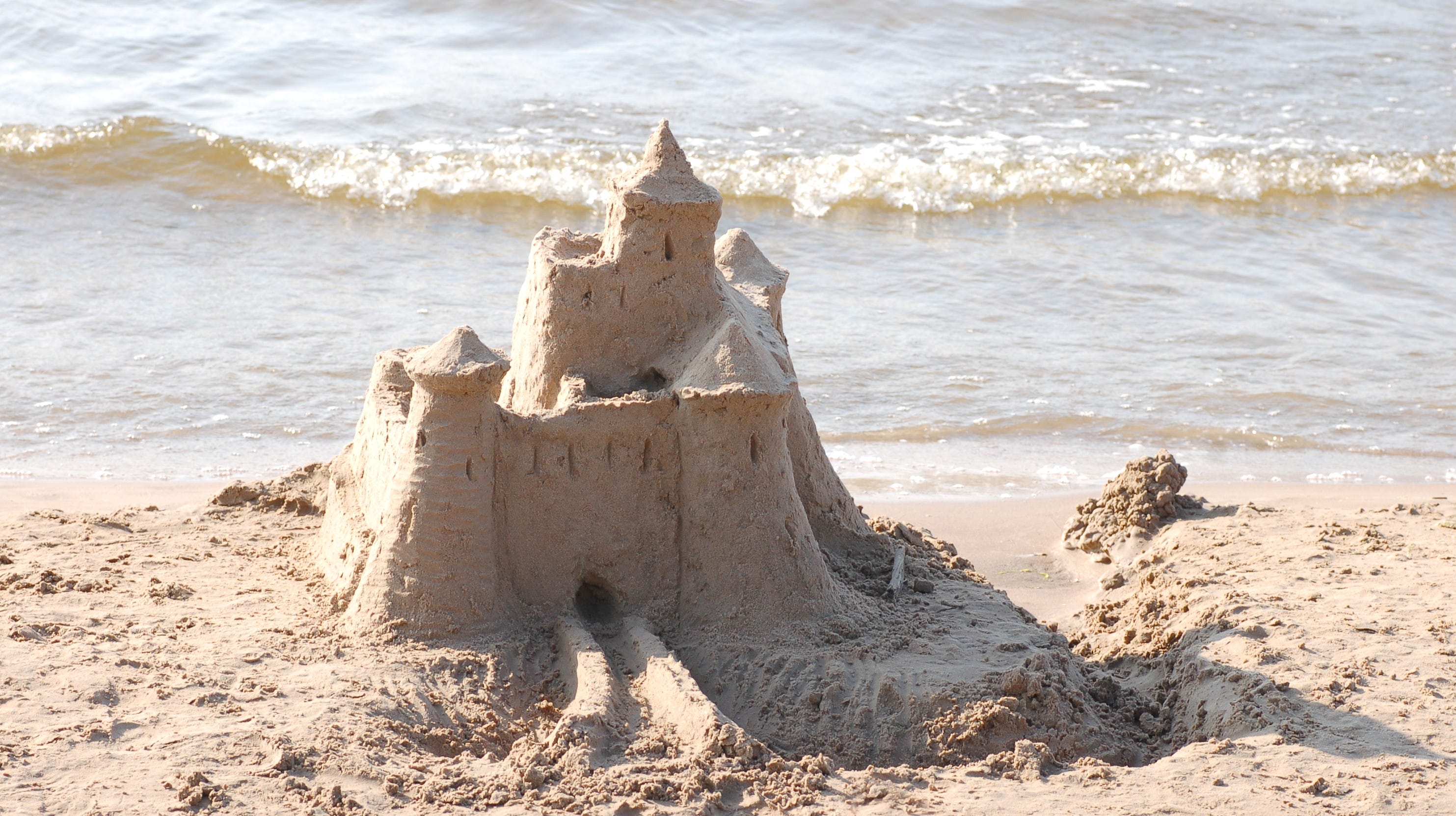
On an old poem and the life that followed it.
At its heart, Our Portugal Journey remains what it has always been—a publication rooted in Portugal, travel, culture, food, place, and the everyday experience of building a life here.
That is not changing.
But over time, I’ve come to understand that some of the writing that matters most to me doesn’t always begin with a destination, a village, or a journey outward. Sometimes it begins in a quieter place—in reflection, memory, uncertainty, and the small emotional truths that sit just beneath ordinary life.
That is where The Wider Quiet begins.
This is an occasional space for essays that don't always fit neatly into the publication's usual lanes, but still belong to the same voice, the same life, and the same way of paying attention.
Some pieces may begin in Portugal. Some may not. But all of them grow from the same thread: the part of this work that notices not only where we are, but what life is asking us to carry, question, or understand while we’re there.
If Our Portugal Journey is often about where we go and how we live, The Wider Quiet is for the thoughts that travel alongside us.
I’ll share pieces here from time to time, when they belong.
Carol.
There are certain things we write when we are young that stay with us, not because they are polished or profound, but because they contain something true that we somehow already knew.
Decades ago, I wrote a short poem called Castles in the Sand. I’ve carried it with me ever since.
When I read it now, I can still hear the younger voice behind it. But I also hear something else—an early understanding that dreams are often fragile, that life is never as permanent as we imagine, and yet still worth building with care.
Perhaps that is why I’ve never let it go.
It was written long ago, but it still feels, in its own small way, like an honest map of how I’ve tried to live.
Here it is, lightly polished, but still very much as I wrote it then.
Castles in the Sand
I’m going to build my dreams
from castles in the sand.
I’m going to make my life a reality—
and when my time is over
and all my dreaming is done,
I’ll watch the castles wash away
and leave me one by one.
At the time, I couldn’t possibly have known all the ways life would shift, undo itself, surprise me, and ask me to begin again. I didn’t yet know where I would live, what I would lose, what I would build, or how many times a person can quietly reinvent a life.
And yet, when I read those lines now, I recognize something familiar.
Even then, I seemed to understand that much of life is built from things that are not especially solid at the start—hope, longing, imagination, love, reinvention, courage, timing, luck.
We build anyway.
Perhaps that is all any of us have ever done.
We make homes, relationships, careers, identities, and stories from materials far more fragile than we admit at the time. We call them plans. We call them certainty. We call them the future.
But often, they are castles in the sand.
That does not make them foolish.
If anything, it may be what makes them precious.
There is something both humbling and comforting in realizing that so much of life is temporary, not because it makes things meaningless, but because it reminds us that permanence was never really the point.
The point, perhaps, is that we built something at all.
That we loved, tried, hoped, made, moved, risked, changed, stayed open, and shaped a life while we were here.
In time, the tide comes for all of it—the plans, the roles, the certainties, the versions of ourselves we once believed would last forever.
And still, we build.
That may be one of the quietest forms of courage there is.
When I wrote Castles in the Sand, I had no idea how long a few simple lines could follow a person.
I only know that they did.
And perhaps that is what old poems, old photographs, old letters, and old selves sometimes offer us—not nostalgia exactly, but recognition.
A reminder that even before we had the language for our lives, we were already trying to name them.
And sometimes, if we’re lucky, we discover that the younger voice was not wrong.
This piece is part of The Wider Quiet.
I’m touched by this reflection, mirroring some of the things that I also value. Poignant, realistic and hopeful for a future still in the making. Thank you for sharing this still timely poem.