
Valentine Celebrations in Portugal: Love, Legends & Modern Romance
Tracing Portugal’s love stories from ancient legends to the quiet romance of modern life.


Portugal has many celebrations throughout the year. For such a small country, its calendar is filled with saints’ days, village festivals, religious processions, and seasonal traditions that bring communities together in ways both joyful and deeply rooted.
After experiencing many of those celebrations ourselves, Paul and I began to wonder whether Valentine’s Day held any special meaning here. Are there uniquely Portuguese traditions tied to love and romance?
In modern times, Valentine’s Day in Portugal looks much like it does elsewhere: dinners out, flowers, chocolates, and quiet moments shared between couples. But look beyond the shop windows and you’ll discover that Portugal’s relationship with romance is rooted in legend, symbolism, and centuries-old customs that feel far more poetic than commercial.
Love, Legend, and Saint Valentine
The origins of Valentine’s Day in Portugal as in much of the world, are shaped more by legend than documented history. One of the most enduring stories comes from the third century, during the reign of Roman Emperor Claudius II.
Determined to build a powerful army, the emperor outlawed marriage for young men, believing family ties made soldiers weak. A Christian priest named Valentin openly defied the decree, secretly performing marriages for couples who wished to wed.
When his actions were discovered, Valentin was imprisoned. Legend tells that during his captivity he received notes and flowers from young people who supported his belief in love. He also befriended the blind daughter of his jailer, whose sight was miraculously restored. Before his execution on February 14, 270, Valentin is said to have written her a farewell note signed simply, “From your Valentine.”
Pagan Roots and the Birth of a Tradition
An earlier story traces Valentine’s Day to the ancient Roman festival of Lupercalia, celebrated each February to mark purification, fertility, and the coming of spring.
In the late fifth century, Pope Gelasius I abolished pagan celebrations in favor of Christian observances, replacing Lupercalia with the Feast of Saint Valentine. Over time, handwritten love messages and symbolic gestures became associated with the date.
Interestingly, the Catholic Church later removed Saint Valentine’s feast from the liturgical calendar in the 1960s, citing limited historical evidence. By then, however, the romantic symbolism had already taken root.
The Valentine Scarf: Love, Stitched by Hand
One of Portugal’s most charming expressions of romance dates to the 17th century: the Lenço dos Namorados, or Lover’s Hankerchief.
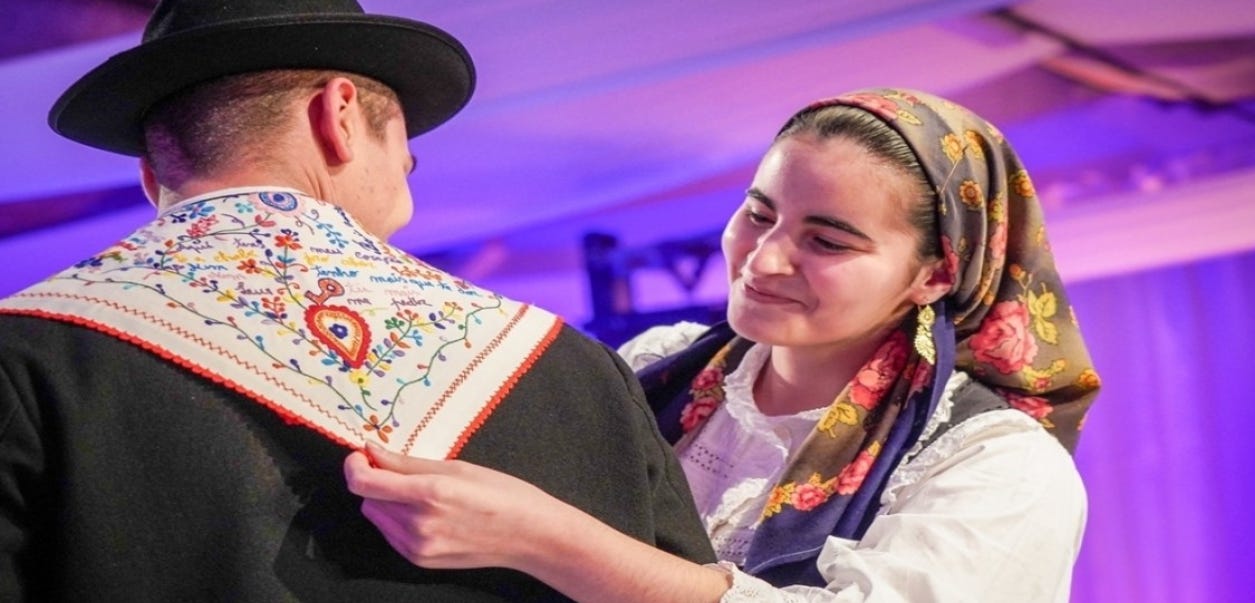
Originating in the Minho region, known for its fine embroidery, young women stitched delicate scarves adorned with hearts, flowers, birds, and poetic messages often spelled phonetically, reflecting limited formal education.
Tradition held that a young woman would offer (or discreetly drop) her embroidered scarf where a young man she admired might find it. If he accepted her affection, he wore it publicly. If not, the message was quietly understood.
Today, these scarves are no longer courtship tools, but they remain beloved symbols of Portuguese folk art, still found in shops selling traditional linens.
The Cantarinha dos Namorados: A Promise in Clay
Another enduring symbol of romance comes from Guimarães: the Cantarinha dos Namorados (Lover’s Pitcher).
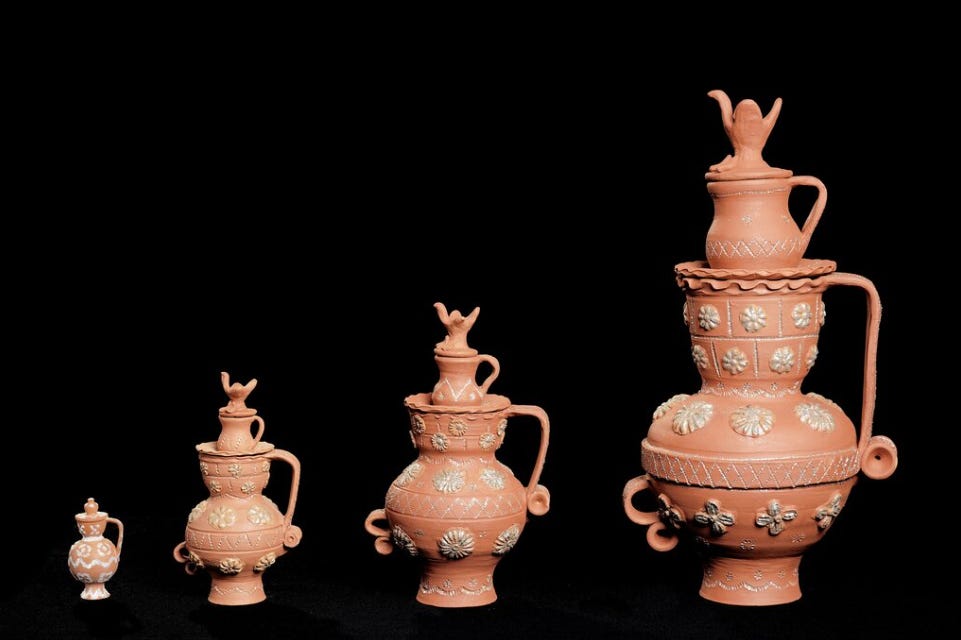
Handcrafted from red clay using centuries-old methods, these small vessels were traditionally offered by a young man as a symbolic proposal. If accepted, and approved by the woman’s family, the cantarinha might be used to save money for wedding items or treasured gifts.
Each piece carries symbolic meaning: the wide base represents prosperity, the narrower upper section symbolizes the challenges couples may face, and the bird at the top is said to guard the couple’s secrets.
While no longer part of courtship rituals, cantarinhas remain beautiful works of folk art. Personally, I’d happily choose one over chocolates or flowers.
Portugal, Naturally Romantic

Portugal may not have invented Valentine’s Day as we know it today, but it hardly needs manufactured romance. Love here feels woven into everyday life: in historic towns, winding streets, rivers at sunset, and meals meant to linger.
Whether it’s a quiet café moment, a walk through an old village, a glass of wine overlooking the Douro, or a candlelit dinner tucked down a cobbled street, Portugal offers romance without trying too hard.
A Seasonal Note
With Valentine’s Day falling on a weekend this year, some hotels across Portugal are marking the occasion with quietly seasonal programs. In the Algarve, for example, Victoria Golf Resort & Spa is framing the moment as a cherished hideaway, pairing gastronomy and spa time with the region’s slower winter pace. It’s a contemporary echo of something long familiar here: that romance in Portugal often takes the form of retreat, ease, and time set aside rather than spectacle.
Perhaps that’s the real lesson behind these traditions: love doesn’t require grand gestures - just time, intention, and a beautiful place to share it.
Thanks for being on this journey with me.
Thank you for reading Our Portugal Journey. This publication is free and open to everyone, and it exists thanks to the support of readers like you. If you’d like to receive new posts and help keep this work independent - and help support the research, time and travel that goes into it - you’re warmly invited to become a free or paid subscriber.
You can also buy me a coffee (or a glass of wine) anytime right here.
However you choose to support me, I’m truly grateful you’re here.
Until next time…
Obrigada!
Carol.
Very interesting. Thank you for the post.