
When Tourism Puts People First
Why Portugal’s Centro Region May Offer a Different Model for Travel.

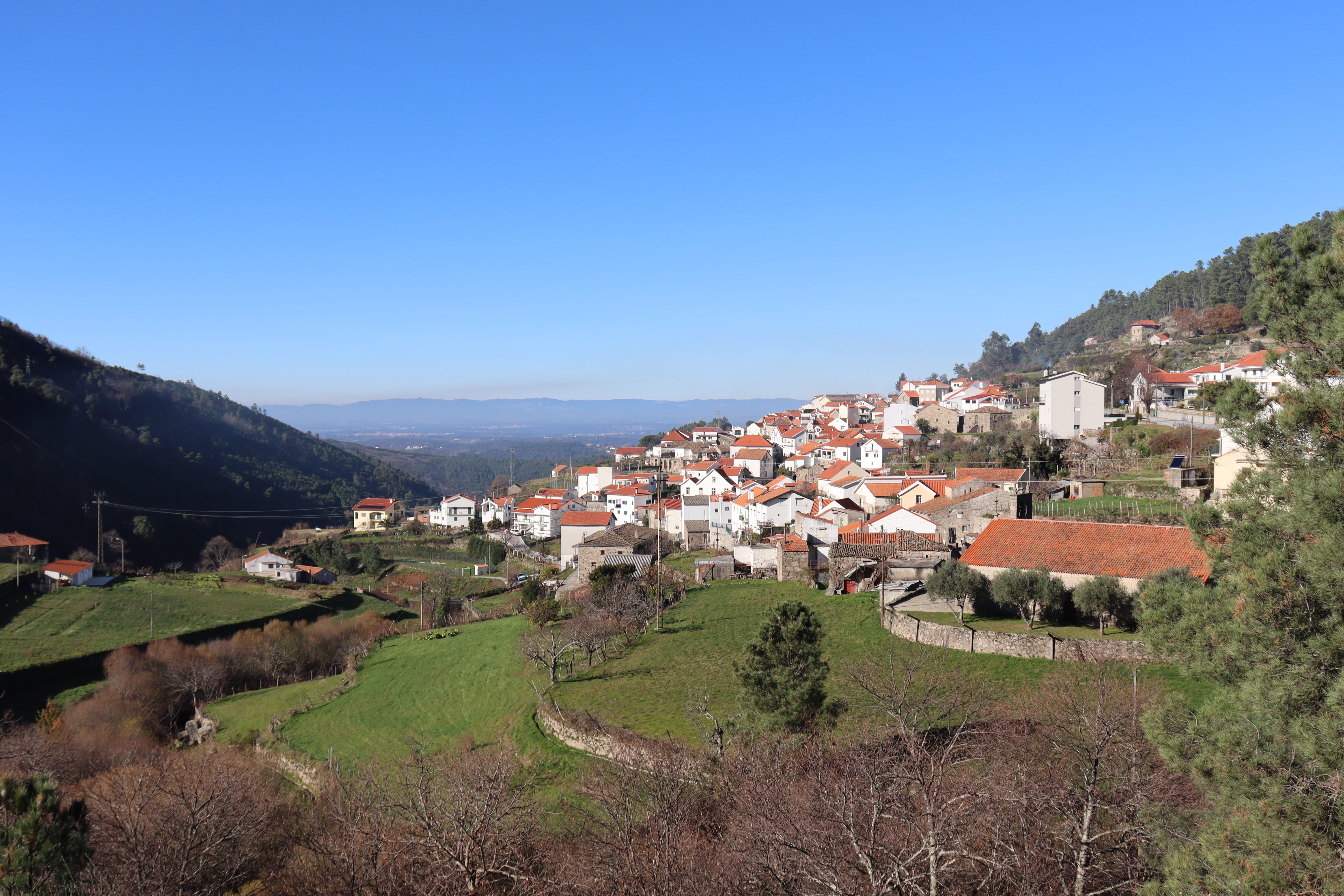
In recent years, conversations about tourism have begun to shift in tone. The question is no longer simply how to attract more visitors, but how tourism can serve the places and communities that welcome them.
At its best, tourism should benefit residents as much as visitors.
That idea surfaced again recently as Turismo Centro de Portugal began developing a new regional tourism strategy. The effort reflects a growing recognition that tourism works best when it strengthens the communities that make destinations meaningful in the first place.
In a country where tourism has become one of Portugal's most important economic engines, this is far more than an academic discussion. Tourism has restored historic buildings, supported restaurants and small hotels, and created new opportunities in communities that once struggled economically.
But success has also introduced challenges. In parts of Lisbon, Porto, and the Algarve, the pace of tourism growth has sometimes outpaced the ability of communities to adapt comfortably.
The Centro region of Portugal (Central Portugal) presents a different landscape.
Stretching from Atlantic coastlines to mountain villages in the Serra da Estrela, the region is filled with historic towns, vineyards, forests, and small communities whose rhythms have changed little over time. There are, of course, significant destinations such as the Sanctuary of Fátima, which draws pilgrims from around the world. Yet much of the region remains defined by smaller towns and villages that sit quietly within Portugal’s interior landscapes.
Although the Centro region does not have a major international airport of its own, most visitors arrive through Lisbon or Porto before continuing easily by road or rail into the region’s towns, villages, and mountain landscapes.
For visitors, this slower pace is part of the region’s charm.
For me, the region also carries a more personal connection. My maternal ancestry traces back to this part of Portugal, which perhaps explains why its landscapes and villages hold a particular resonance.
Long before moving to Portugal, I also saw how tourism unfolds in smaller communities while serving as Executive Director of a Chamber of Commerce in a seaside town in Rhode Island. Many of our members depended on seasonal visitors who came not for major attractions but for the atmosphere of the place itself — local beaches, familiar cafés, and a pace of life that felt distinct from larger destinations nearby such as Newport or Providence. It was an early reminder that smaller places often possess a quieter but equally powerful appeal.
Over the past few years, Paul and I have visited many of Centro Portugal’s larger towns and cities, but we have only begun to explore the smaller villages that quietly shape the region’s character.
Some of these villages reveal how tourism can unfold on a very human scale. In the tiny mountain village of Cabeça, for example, residents come together each December to transform their home into one of Portugal’s most distinctive Christmas villages, using natural materials gathered from the surrounding forest. The celebration draws visitors while remaining rooted in community life rather than spectacle.
(You can read about our visit here: The Village of Cabeça.)
Experiences like this hint at something important about the Centro region: it offers an opportunity to shape tourism in ways that remain closely connected to local life.
Regional tourism organizations across the Centro region have already begun exploring ways to encourage this kind of balanced growth, recognizing that the long-term health of tourism depends on the vitality of local communities.
Tourism here does not need to follow the same path as larger destinations. It does not require crowds, large resorts, or constant expansion to succeed.
Instead, the region offers an opportunity to think about how tourism can grow differently.
Visitors who come here tend to move more slowly. They explore small towns, linger over regional dishes, talk with shopkeepers, and discover landscapes that feel removed from the pressures of global tourism. Rather than overwhelming a place, this kind of travel can quietly support it.
Small guesthouses fill rooms.
Local restaurants welcome new customers.
Traditional crafts and agricultural traditions find new audiences.
It is tourism that complements community life rather than replacing it.
If tourism continues to grow in the region, the opportunity (and the challenge) will be ensuring that growth strengthens the communities that make the Centro region special in the first place.
As Centro Portugal continues to shape its tourism future, the region may have a unique opportunity to demonstrate how thoughtful growth can strengthen both communities and visitor experiences.
Portugal has long understood the power of hospitality. But in my view, the most memorable places are rarely those that feel designed for tourists. They are places where daily life continues naturally and where visitors are welcomed into an existing rhythm rather than reshaping it.
The villages and landscapes of the Centro region still offer that balance.
Because travel, at its best, is not about consuming a place.
It is about learning how to enter it gently.
And perhaps that is the quiet promise behind the idea of tourism that puts people first.
Thanks for being on this Journey with me. Thank you for reading Our Portugal Journey. This publication is free and open to everyone, and it exists thanks to the support of readers like you. If you’d like to receive new posts and help keep this work independent - and help support the research, time and travel that goes into it - you’re warmly invited to become a free or paid subscriber.
You can also buy me a coffee (or a glass of wine) anytime right here.
However you choose to support me, I’m truly grateful you’re here.
Until next time…Obrigada,
Carol.
See? There is that Portuguese kindness shining through Carol! You have it as well!
I will NEVER forget the kind lady at the airport in Lisbon who realized how ill I was and found me a wheelchair and got me through passport control. She was a saint. And the driver who came to collect us was patient and kind and so thoughtful. He gave me water and waited for me to collect myself (a challenge for sure as I really felt dreadful). I tipped him very generously and he tried to refuse my tip, but I insisted and I think he was as appreciative of my generosity as I was of his thoughtful kindness. And the woman at Casa do Barão where we stayed for three nights ( and where we will stay again next February when we hope to see you!) was so caring and thoughtful and got me to my room quickly and efficiently so I could rest and recover) was an angel. The warmth and kindness continued throughout my stay and I tried to reciprocate with gratitude. I don’t forget such things. I really needed help and they offered it without question. The depth of my gratitude is immeasurable. That will stick with me forever. Wonderful, kind, generous, caring and lovely Portuguese people were my first introduction to that part of the world which was brand new to me. It was just after COVID and it had been a difficult time for the whole world. I still think about it and am still in awe! I will always love that place because of that kindness.
Terrific post! As a courteous and culturally appreciative tourist I think that I have a responsibility to be polite, respectful and nonintrusive as I explore and travel. My brief but very positive experiences in Portugal were wonderful! I remember Portugal for its warm people, its kindness to me when I arrived there feeling quite ill, and its incredible beauty. I am eager to return so I can explore a bit more and learn further about the history and culture and I will continue to be courteous and appreciative as I travel as I have encountered those who are otherwise it is not a pleasant experience!