
Approaching the 5-Year Mark: Stay or Leave Portugal?
What living abroad eventually reveals about uncertainty, belonging, and the idea of home.

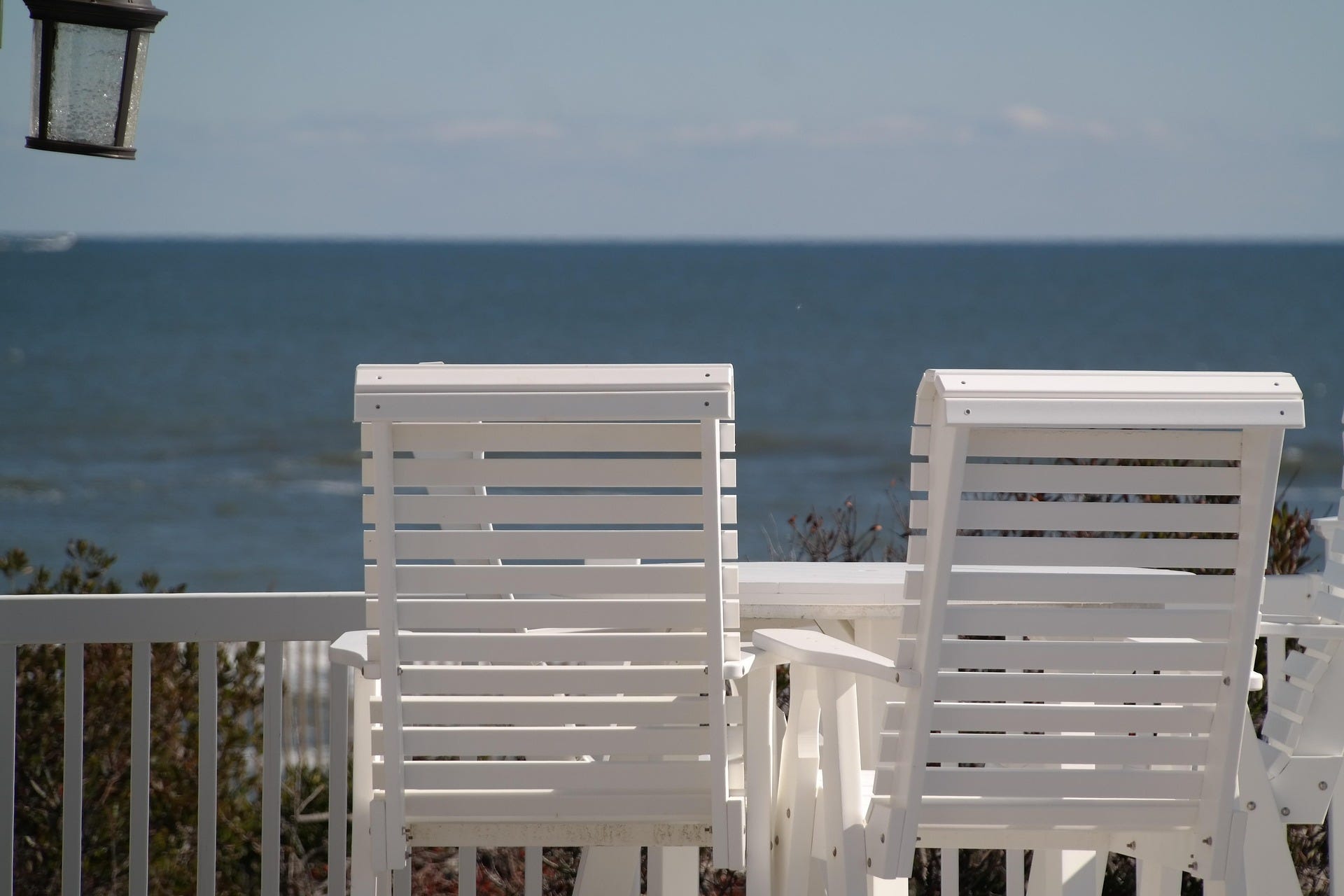
This November, Paul and I will reach the five-year mark as foreign residents in Portugal.
When we arrived in late August 2021, five years felt impossibly far away. Life still felt transitional—exciting, uncertain, occasionally overwhelming—and shaped by the practical realities of building a new life in another country.
Now, somehow, that milestone is almost here.
As it has drawn closer, I’ve noticed that many conversations with people who have lived abroad for several years eventually arrive at the same question: Do we stay, or do we leave?
On the surface, that question is often prompted by residency renewals, changing circumstances, or family considerations. But beneath those decisions lies something much larger: where we belong, what we value, and what we have come to think of as home.
Part of that conversation is shaped by circumstances. Portugal has changed considerably in recent years. Rising costs, overtourism in some areas, housing pressures, endless bureaucracy, changing immigration policies, political tensions, and the eventual end of the NHR tax structure for many foreign residents have all reshaped the conversation around long-term life here.
There is also growing frustration among some foreign residents who originally believed that five years of legal residency would place them on a path toward Portuguese nationality, only to discover that the government has since changed the timeline for many applicants to ten years instead. Some people feel disappointed. Others feel genuinely betrayed. When expectations change after people have already built lives around them, trust can erode.
And honestly, I can appreciate that.
For many people, moving abroad is not simply a lifestyle experiment or temporary adventure. It is an emotional, financial, and practical commitment that reshapes nearly every part of life. When policies shift after people have already built lives around certain expectations, it can create a very real sense of instability.
At the same time, I am not convinced most long-term decisions about staying or leaving are determined by policies and paperwork alone.
People often come to Portugal for practical reasons at first. Safety. Climate. Walkable towns and cities. Better weather. Accessible healthcare. Lower stress. Fresh food. A slower rhythm to daily life compared to where they came from.
Some arrive looking for emotional breathing room after years of stress, division, or instability in the places they once called home. Others are drawn by the possibility of building a different kind of life, one that feels healthier, calmer, safer, more sustainable, or simply more aligned with who they are becoming. For many people, including those who may not have always felt entirely comfortable or accepted where they previously lived, Portugal can offer a greater sense of ease in daily life.
And many of these things are real.
Portugal generally is safer than many places, though common sense and awareness still matter here as they do anywhere. The pace often does feel less frantic. People spend time outside. They walk more. They gather in cafés. Lingering over meals still matters here in ways many newcomers find deeply appealing.
But after enough time passes, I think the deeper questions begin to surface.
At first, living abroad often feels temporary, even when you suspect it may not be. You are still learning systems, navigating bureaucracy, figuring out healthcare, finding favorite shops and grocery stores, trying to learn the language, and slowly adapting yourself to the rhythm of another country.
Then one day, almost without noticing it, the country stops feeling like an experiment.
It simply becomes life. And once that happens, the questions begin to change.
Not:
Where should we live?
But:
Do I still feel good about building a future here?
Raising a family here?
Growing older here?
Like many people who build lives abroad, Paul and I have found ourselves thinking more seriously over time about what long-term life here actually means. Not just financially or legally, but emotionally. What makes a place continue to feel sustainable? What helps people remain connected, grounded, and fulfilled over time? And how much of that can really be planned in advance?
In certain countries, there is enormous cultural pressure to prepare correctly for the future — financially, legally, medically, and emotionally. Modern life can sometimes feel as though it expects people to engineer every possible outcome in advance.
Paul and I have felt that pressure too. We have conversations about what the future might look like as we get older, where we may eventually want to live, and what type of support we may need.
We also wonder whether we are planning enough and how much of life can realistically be prepared for in advance.
Some people we know have mapped out their futures with impressive precision. Others seem to move through life far more instinctively, adapting as circumstances change. Over time, I have come to realize there is no single formula that guarantees peace, certainty, or control.
And experience has also taught me that many of the things people spend years worrying about never actually arrive in the form they imagined or expected.
Life has a way of surprising people, sometimes painfully, sometimes beautifully, and often unpredictably. That realization has shaped how I think about building a long-term life abroad. It has also made me increasingly skeptical of the idea that there is one “correct” roadmap for the future.
Healthcare often sits at the center of many of these questions — at least it does for us. In truth, Portugal’s healthcare system has treated many residents, including foreign residents, very well. But concerns still arise, particularly when people begin thinking about long-term life here. Language barriers can feel more intimidating when discussing serious medical issues.
At the same time, many people living abroad may quietly assume that if they choose to return to their country of origin someday, it would automatically provide more predictability, stability, comfort, or familiarity.
I am no longer convinced that reality is always so simple.
Systems that we once took for granted everywhere seem to be under strain in different ways. Costs rise. Policies shift. Institutions evolve. Countries change, just as people do.
The longer I live abroad, the more I realize these are not really “Portugal questions” at all. They are real-life, human questions about belonging, identity, change, and where we choose to call home.
One realization that has followed me for years is this: you can never truly go back. Places change. People change. You change. The version of “home” that exists in memory often no longer exists in quite the same way by the time you return to it.
That is part of what makes long-term life abroad emotionally complicated. After enough time passes, the life you left behind and the life you built abroad begin to coexist, each continuing to shape how you see yourself and the world around you.
I think that is also why questions around permanence can become so emotionally charged for people living abroad. Property ownership, residency status, and citizenship often come to represent something larger than practicality alone. Stability. Continuity. A sense of being anchored somewhere.
And to some extent, those things do matter. They can provide security, opportunity, and a greater sense of belonging. But over time, I have become increasingly cautious about assuming they can guarantee permanence. Life has a way of reminding us that circumstances change. Governments change. Economies change. Health changes. Relationships change. Even our own priorities can change.
That does not mean planning is foolish. Practical decisions matter. Thinking ahead matters. But there also comes a point where the effort to secure every possible future can quietly begin pulling attention away from the life already unfolding in front of us.
Perhaps that is one of the lessons living abroad has reinforced for me. Stability has value, but certainty remains elusive. No residency card, passport, property deed, or long-range plan can guarantee that life will unfold exactly as we expect.
That is what Paul and I continue trying to navigate as we approach five years in Portugal. Truthfully, we don’t have a perfectly engineered roadmap for the future. But we have reached a place where we understand that uncertainty is not necessarily a sign that something has gone wrong. It is simply part of building a life anywhere. We continue to take life as it comes and face it together.
As we approach the five-year mark, I find myself returning less to the question of permanence and more to the question of presence.
For now, this still feels like the right place for us to be.
Will that always remain true? I do not know. I don’t think any of us fully do.
Perhaps one of the lessons living abroad eventually teaches is not certainty, but the willingness to keep building a meaningful life anyway, even while knowing that no place, no plan, and no future can ever be fully guaranteed.
If you would like to share your personal insights, I would love to hear them.
Thanks for being on this journey with me.
Thank you for reading Our Portugal Journey. This publication is free and open to everyone, and it exists thanks to the support of readers like you.
If this work resonates with you, you’re warmly invited to subscribe - or, if you’d like, to support it as a paid subscriber and help keep it independent.
You can also buy me a coffee (or a glass of wine) anytime right here.
However you choose to support this work, I’m truly grateful you’re here.
Until next time…
Obrigada!
Carol.
We have been here since Feburary 2019 so over 7 years now and for us this summer is make or break. In that time we have had a lot of things to deal with. Multiple floods, a forest fire that nearly took our property (and did burn our small, ancient Olive tree orchard). Seismic activity that has cost us quite a bit as well as experience of the healthcare system after an accident caused serious injuries to my partner. Then we had the 'storm' in January and we are in the hardest hit area. I have spent a lot of time this year in repairs and there is more yet to do. I have very mixed feelings. Bureaucracy is certainly not an incentive. I have direct experience of another country that has moved from behind Portugal to well ahead in the last few years, in terms of efficiency. My difficulty in learning the language doesn’t help. I love my home here and many other things about living in Portugal but I do not fancy another Storm. Im already in my sixties I do not relish another round of fixing extensive damage in my seventies and beyond. So, we have a decision to make but are going to take the whole summer to remind ourselves why we are here first.
Congratulations on reaching this milestone! Time does move quicker than we realize. September will be 7 years here for us. For me, the most important thing has been flexibility. Adapting to not just a new culture but accepting the frequent changes you mentioned. One positive is that after making this move the next one, if necessary, will be easier.