
Summer Along Portugal’s Beaches May Come With a Few Surprises
Beauty, caution, and the quiet lessons of the Atlantic coast.

Portugal’s Atlantic coast has a way of surprising people.
For many visitors, the beaches here first exist as postcards: long stretches of golden sand, dramatic cliffs, rolling surf, colorful umbrellas, and seafood lunches that drift into late afternoons. Even after several years of living here, Paul and I still pause at certain coastal views simply because they feel almost impossibly beautiful.
But the Atlantic is not a decorative backdrop. It is alive, unpredictable, and sometimes humbling in ways that deserve respect.
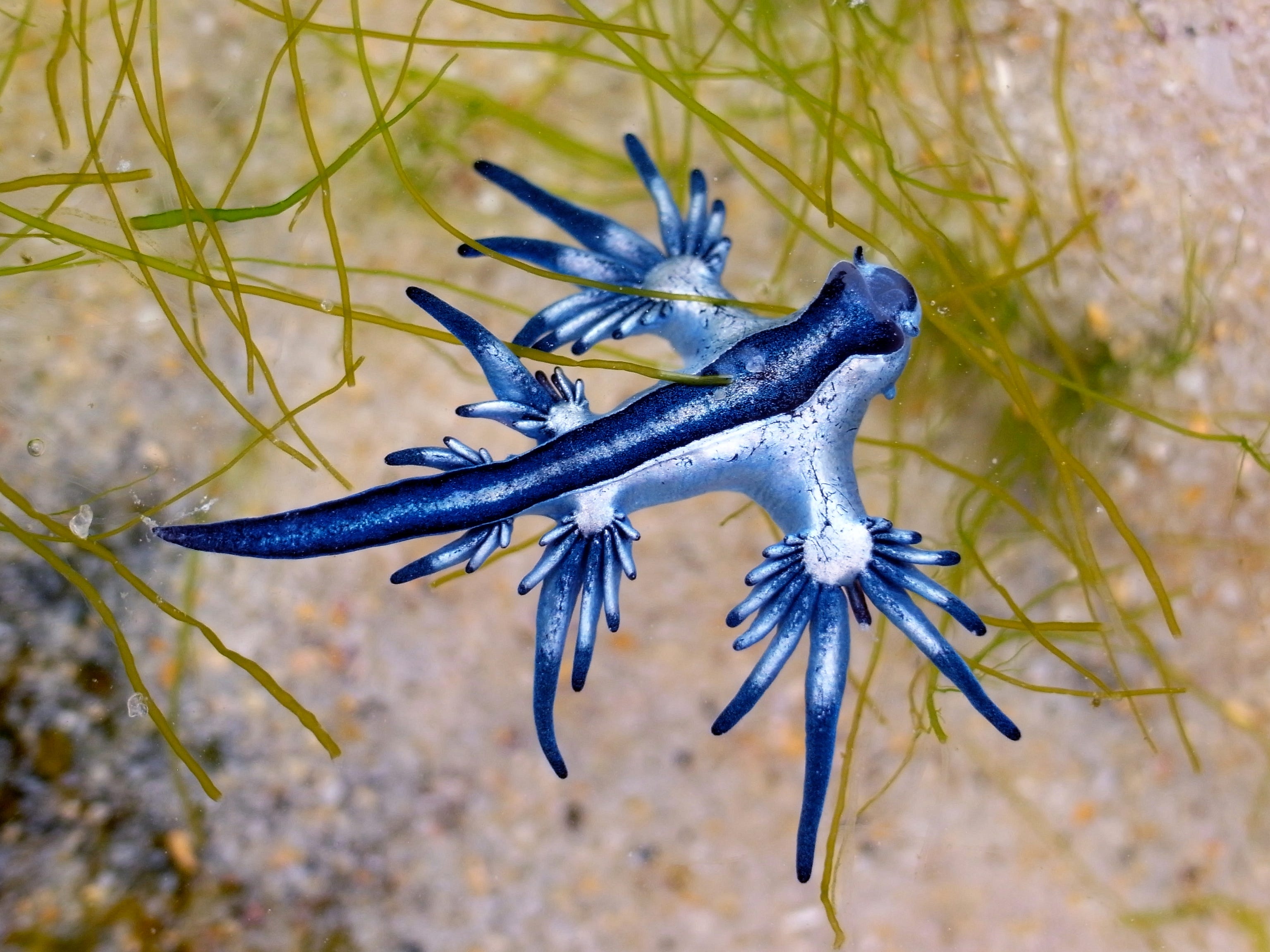
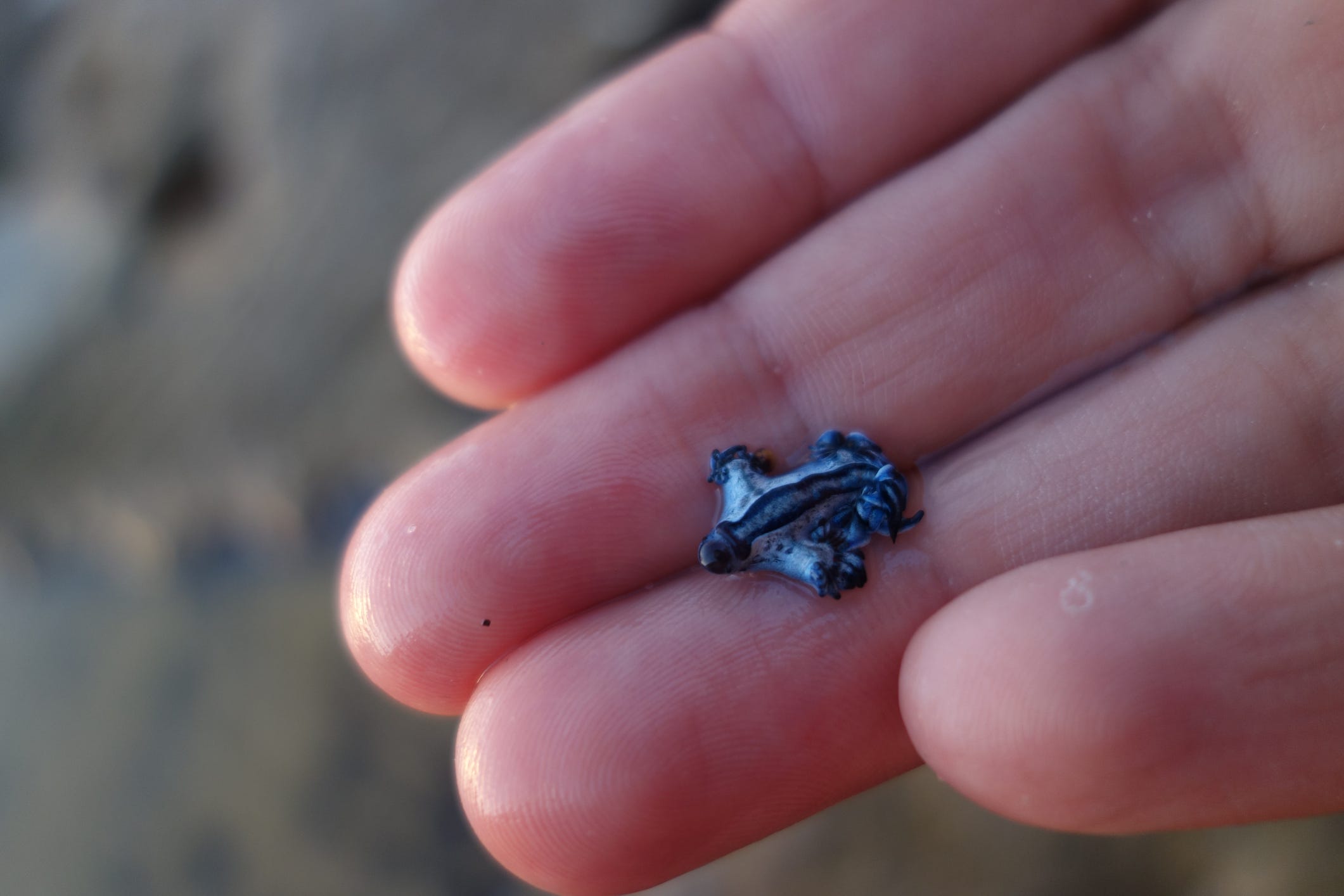
Recently, reports began circulating once again about sightings of the so-called “Blue Dragon” washing ashore on beaches in Portugal. Tiny, electric blue, and strangely delicate in appearance, the creature looks almost unreal—as though it belongs in a piece of glass artwork rather than along the tide line of a public beach.
And yet, despite its beauty, it is one of those quiet reminders that nature doesn’t always announce danger in obvious ways.
The Blue Dragon, or Glaucus atlanticus, is a small sea slug that drifts along the surface of the Atlantic Ocean. What makes it unusual is not simply its appearance, but what it feeds on.
Among its prey is the Portuguese Man o’ War — another deceptively beautiful marine creature known for its painful sting.
Over time, the Blue Dragon is able to retain venom from the Man o’ War within its own body, meaning that even a tiny specimen washed ashore can still deliver a painful and potentially dangerous sting if touched.
It is not something most people expect to encounter during a summer walk on the beach.
Encounters with Blue Dragons on Portuguese beaches are still considered rare. But marine researchers note that shifting Atlantic winds, storms, and changing surface currents can occasionally carry these tiny creatures closer to shore.
In Portugal, sightings have historically been isolated, most often in the Algarve or the Azores, sometimes appearing after unusual weather patterns move through the Atlantic. Observations collected through the GelAvista project have helped track occasional appearances of unusual marine life along Portuguese shores.
The same ocean currents that shape Portugal’s coastline, fishing traditions, weather, and surf culture also carry unexpected visitors from far beyond the horizon.
Living near the Atlantic in Portugal slowly teaches a different relationship with the ocean. One based less on ownership and more on awareness. Locals understand this instinctively.
Beach warning systems here are taken seriously. Lifeguards monitor conditions carefully. Flags do more than indicate swimming conditions — they communicate changing realities within the sea itself.
Two flags that visitors sometimes overlook are the purple and blue flags, which warn of potentially dangerous marine life in the water. Sometimes that warning relates to jellyfish. Sometimes to Portuguese Man o’ War sightings. Occasionally, it may simply serve as a reminder to pay closer attention to what the ocean has brought ashore.
And yet, there is remarkably little panic around any of it. People adjust. Children are warned not to touch unfamiliar sea life. Walkers become more attentive near the waterline. Lifeguards post notices when needed. The ocean is respected rather than dramatized.
That calmness feels important.
Modern travel often encourages us to experience nature as curated scenery — beautiful, accessible, safe, and designed entirely for our enjoyment. But Portugal’s Atlantic coast still retains something wilder than that.
The currents shift. Storms reshape beaches overnight. Winds change unexpectedly.
Some days the sea appears soft and welcoming. Other days it feels immense and untouchable and even the most beautiful things washing ashore may not be meant for human hands.
There is, oddly enough, something comforting in that reality.
Not because danger itself is comforting, but because it reminds us that the natural world still exists independently of us. The Atlantic does not exist for photographs, tourism campaigns, or summer itineraries. It follows older rhythms than our own.
And perhaps that is part of what makes living beside it so meaningful.
The Blue Dragon is unlikely to become part of most people’s Portuguese beach experience. Encounters remain uncommon, and serious incidents are rare. But the story surrounding it offers a useful reminder for anyone spending time along Portugal’s coast this summer:
Pay attention. Respect the warnings.
Admire beauty without assuming it is harmless.
And remember that the Atlantic, for all its beauty, is still gloriously, stubbornly wild.
If You Visit Portugal’s Beaches This Summer
A few simple reminders for staying safe along the Atlantic coast:
Never touch unfamiliar marine life, even if it appears dead.
Pay attention to beach warning flags and posted notices.
Purple and blue flags indicate potentially dangerous marine life.
Portuguese Man o’ War can still sting even after washing ashore.
If stung, seek assistance from lifeguards or medical personnel.
Conditions can change quickly along Portugal’s Atlantic beaches, especially on windy days.
Resources & References
Information about the Blue Dragon (Glaucus atlanticus):
Wikipedia overview of Glaucus atlanticusPortuguese marine observation project:
GelAvista ProjectBeach warning flag meanings:
https://www.safecommunitiesportugal.com/find-information/for-tourists/water-and-beach-safety/
Thanks for being on this Journey with me.
Thank you for reading Our Portugal Journey. This publication is free and open to everyone, and it exists thanks to the support of readers like you.
If this work resonates with you, you’re warmly invited to subscribe - or, if you’d like, to support it as a paid subscriber and help keep it independent.
You can also buy me a coffee (or a glass of wine) anytime right here.
However you choose to support this work, I’m truly grateful you’re here.
Until next time…
Obrigada!
Carol.
Great article. Stays on point and delivers helpful information while respecting both the Atlantic (for it's power and unpredictability) and Portugal/Portuguese (for practicality and prudence).
Wow, such a tiny thing, but it packs a punch!